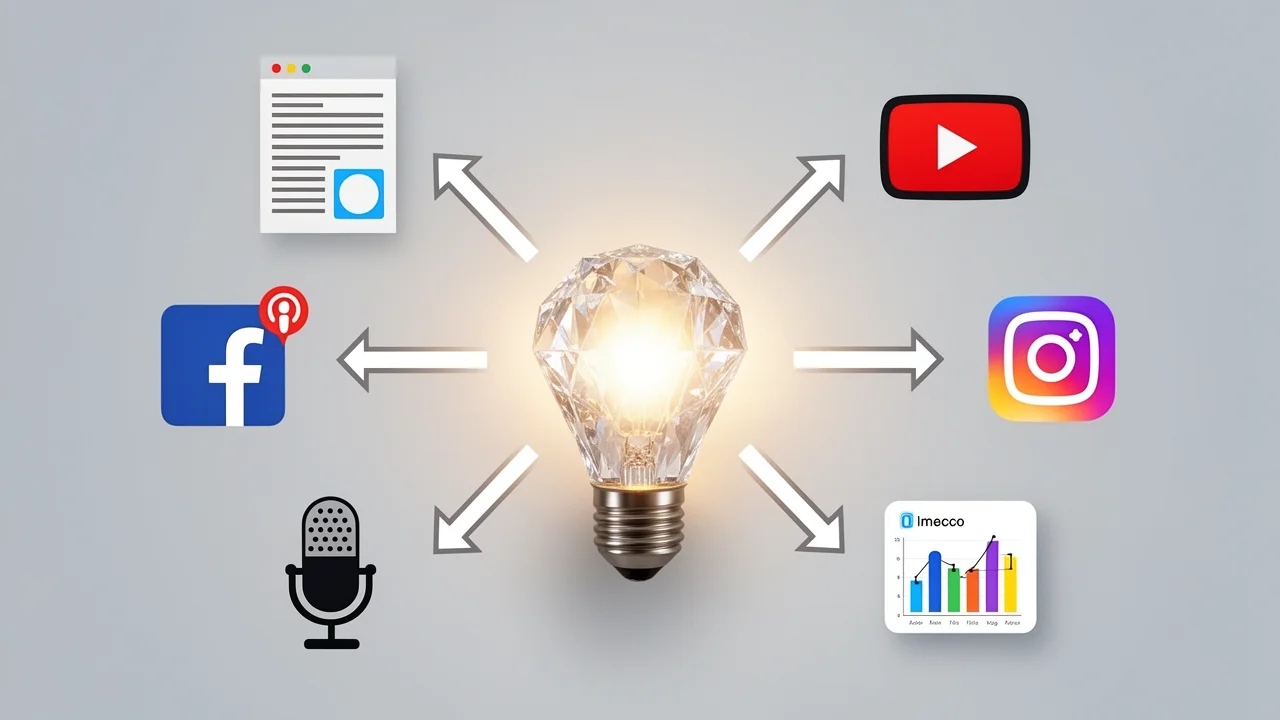
What is Network Content Repurposing?
Content repurposing is the strategic practice of taking one substantial piece of content—like a pillar article, research report, or video—and adapting it into various formats and angles for distribution across different channels. For a Private Blog Network (PBN), this means tailoring the repurposed content to fit the unique voice, audience, and topical focus of each subdomain within your network. This approach is not about duplication; it’s about intelligent adaptation that provides unique value on each site while leveraging the core research and messaging of your flagship content. This efficiency is a cornerstone of modern SEO strategy for building brand awareness at scale.
The Strategic Benefits of Repurposing for PBNs
Repurposing is a force multiplier for network managers.
- Dramatically Increases Efficiency: Creating one in-depth piece and deriving 5-10 others can cut content creation time by 50-70%. - Strengthens Topical Authority: By covering a subject from multiple angles across your network (e.g., a beginner’s guide on one site, an advanced case study on another), you signal comprehensive expertise to search engines. - Reaches Diverse Audiences: Different formats (text, video, audio) and different editorial slants appeal to different user preferences, expanding your overall reach. - Improves Internal Linking Opportunities: Repurposed content pieces can be interlinked, creating a robust, topic-focused web that boosts the SEO of all involved pages. This is a key tactic discussed in resources for SEO professionals.
A Step-by-Step Repurposing Framework
Follow this process to systematically repurpose content across your network.
1. Start with a ‘Content Atom’ Identify your core, high-value ‘atom.’ This should be a comprehensive piece, such as: - A 3,000-word ultimate guide - An original research report with data - A long-form interview or webinar recording
2. Break It Down into ‘Content Molecules’ Deconstruct the atom into its core ideas, statistics, quotes, and frameworks. Each of these becomes a potential ‘molecule’—a smaller, standalone piece of content.
3. Transform for Different Formats and Sites Now, adapt each molecule. For example, a single key statistic from your report could become: - For a text-focused site: A short blog post analyzing the stat’s implication. - For a visual site: An Instagram carousel or infographic. - For an audio-focused property: A 60-second podcast segment. Crucially, you must rewrite and reframe the content to match the specific subdomain’s style guide and audience. Using user-friendly software that manages multiple subdomains makes deploying these varied formats much simpler.
Practical Repurposing Ideas for Your Network
Here are actionable ways to stretch one piece of content:
- Pillar Article → Content Cluster: Turn one guide into a series of blog posts for the same site, each diving deep into a sub-topic. - Webinar → Multi-Platform Assets: Transcribe the audio for a blog post, clip key moments for social video shorts, and use the slides for a SlideShare deck. - Data Report → Guest Posts & Outreach: Use compelling data points to craft tailored pitches for guest posts on other sites, driving authority back to your network. - Interview → Q&A Format: Reformulate a long-form interview into a concise Q&A post for a different subdomain with a more casual tone. The goal is to maintain the core value while changing the presentation. Effective PBN management involves tracking these assets to ensure consistent messaging without duplication.
Tools and Best Practices for Efficient Repurposing
Essential Tools: - Canva or Adobe Express: For creating graphics, infographics, and social media assets. - Descript or Otter.ai: For transcribing audio/video content quickly. - Airtable or Notion: To track your original ‘atoms’ and all their derivative ‘molecules’ across your network.
Critical Best Practices: 1. Always Add New Value: Don’t just copy-paste. Each repurposed piece should offer a fresh insight, updated data, or a different perspective. 2. Customize for the Subdomain: Adjust the tone, examples, and depth to fit the specific site’s audience. A technical subdomain needs a different approach than a general advice site. 3. Update and Refresh: When you repurpose older content, take the opportunity to update statistics, refresh broken links, and improve the overall quality. 4. Plan it in Your Calendar: Integrate repurposing tasks directly into your content calendar for network management to ensure it’s a systematic part of your workflow, not an afterthought.